The first 3 digits of a barcode don't tell you where it's made
This is probably the most widespread misconception about barcodes. And it's understandable: the digits look like a country code. But they're not.
In practice: a barcode starting with 3 means the company is registered in France with GS1. But the product could be manufactured in China, Poland, or anywhere in the world.
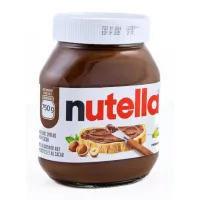
A telling example: Ferrero products (Nutella, Kinder) have an Italian GS1 prefix (800). Yet the Nutella sold in Europe is made in Villers-Écalles, Normandy, France.
For food products, regulations impose specific origin labelling rules (meat, fruit, fish, honey...). Read our guide on food product origin to learn more.
Common GS1 prefixes
These prefixes indicate where the company is registered, not where the product is made.
| Prefix | Registration country | |
|---|---|---|
| 000 – 019 | United States | ≠ made in the USA |
| 300 – 379 | France & Monaco | ≠ made in France |
| 400 – 440 | Germany | ≠ made in Germany |
| 450 – 459 | Japan | ≠ made in Japan |
| 500 – 509 | United Kingdom | ≠ made in the UK |
| 690 – 699 | China | ≠ made in China |
| 800 – 839 | Italy | ≠ made in Italy |
| 880 | South Korea | ≠ made in South Korea |
3 ways to find where a product is made
If the barcode isn't enough, what can you do?
Flip the product over and look for a "Made in..." mention. When it's there, it's the most reliable source. But it's often missing or hard to find.
Often missingCheck the manufacturer's website or a retailer's product page. The info is sometimes in the product details, sometimes nowhere. Expect 5 to 10 minutes per product.
Time-consumingScan the barcode. Mio automatically cross-references multiple public sources to identify the country of manufacture. Result in 10 seconds.
10 secondsHow Mio identifies the country of manufacture
Mio doesn't guess. It cross-references three types of sources for each product, then displays the result with its confidence level and the sources used.
Open Food Facts, GS1 data, retailer databases. Structured information on millions of products.
An agent automatically searches manufacturer websites, retailers, and the web to find origin mentions in real time.
Users contribute by reporting the origin when they find it on the packaging. These contributions enrich the database over time.
What the confidence levels mean
Mio doesn't claim to know everything. Each result comes with a confidence level that reflects the quality of the sources found.
Everyday products and where they're actually made
Here's what Mio finds for some common products. Results are based on publicly available information at the time of the scan.
Everything you need to know about product origins and barcodes
-
The barcode alone doesn't contain the country of manufacture. The first 3 digits (GS1 prefix) indicate the country where the company is registered, not where the product is made. To find the origin, you need to cross-reference multiple sources: product databases (Open Food Facts, retailer data), manufacturer websites, and packaging information. The Mio app automates this search in a single scan that takes a few seconds.
-
The first 3 digits of an EAN-13 barcode are the GS1 prefix. They identify the country where the company is registered with GS1, the international organization that assigns barcodes. For example: 000-019 for the USA, 300-379 for France, 690-699 for China. But this is not the country of manufacture. A product with a US prefix (0xx) can be manufactured anywhere in the world.
-
No. This is a very common misconception. A barcode (EAN or UPC) is a commercial identifier assigned by GS1. Its prefix (the first 3 digits) indicates where the company registered the barcode, not where the product was manufactured. Example: Nutella has an Italian prefix (Ferrero is registered in Italy), but the Nutella sold in Europe is made in Normandy, France.
-
Yes. Mio is a free app available on iOS and Android that identifies the country of manufacture of a product by scanning its barcode. It cross-references three types of sources: a database of 69 million products, an AI agent that searches the web in real time, and community contributions. Each result displays a confidence level and the sources used, so you know exactly where the information comes from.
-
They're complementary. Yuka analyzes nutritional quality and additives of food and cosmetic products: it answers "is this good for me?". Mio identifies the country of manufacture of any product with a barcode (food, but also cosmetics, electronics, textile, cleaning products...): it answers "where is this made?". Many users use both.
-
Mio aggregates information from public sources: open databases, manufacturer websites, retailer websites, and community contributions. Each result comes with a confidence level (from "certified" to "estimated") and the sources used. Mio doesn't certify a product's origin: it aggregates and cross-references publicly available information, then presents it transparently so everyone can form their own opinion.
-
No. Mio works with any product that has a barcode: food, cosmetics, hygiene, cleaning, electronics, textile, toys... If the product has an EAN or UPC barcode, Mio can look up its country of manufacture.